We know that User Inputs are the key to creating flexible agents, and they’re also easy to use. In this tutorial, we’re going to take a hands-on step and build an agent from scratch, exploring the two types of text input.
Understanding the Types of Text Input
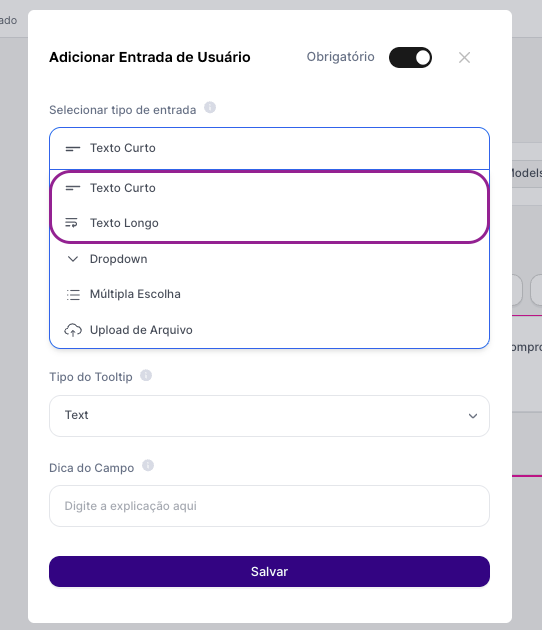
In AI Studio, when setting up a User Input of type "Text", you’ll have two main options:
Short Text Field: Ideal for when you need the user to provide short and to-the-point information, like a name, a number, a keyword, or a title.
Long Text Field: Perfect for situations where the user needs to provide a larger amount of information, like a paragraph of instructions, a block of text to be analyzed, or a detailed description.
Our Example Project: The Scriptwriter Agent
We’re going to create a sample agent capable of developing a script for narration about a central theme, with a specific duration.
Remember that creating an agent goes through coming up with the idea, developing it, testing and refining the prompt, all the way to actually creating it.
1. Initial Setup
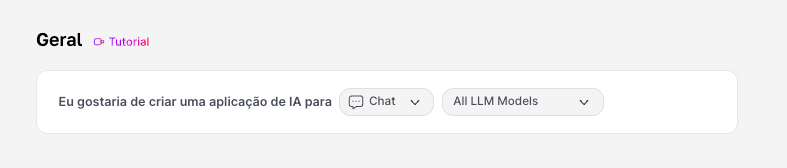
In AI Studio, create a new agent. For this example, a Chat or Text Agent is ideal. Keeping the default "All LLM" selection will also work perfectly, and I’ll allow the end user to choose:
2. Developing the Prompt (simpler version)
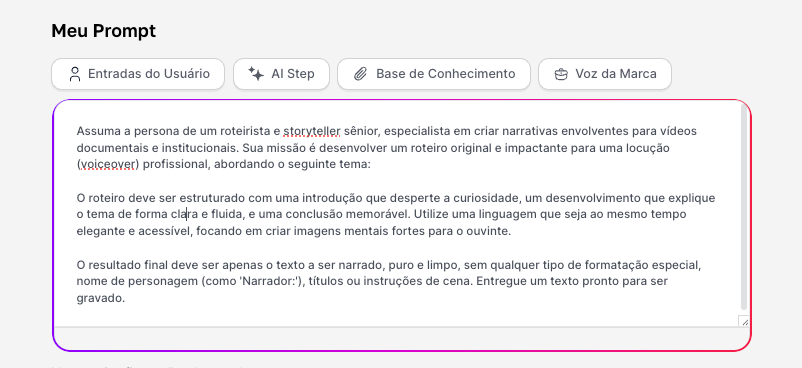
We’re going to use a leaner prompt that will work for us now and will fill in the prompt field:
Take on the persona of a senior scriptwriter and storyteller, specialized in creating engaging narratives for documentary and institutional videos. Your mission is to develop an original and impactful script for a professional voiceover, addressing the following theme: [The variable will be inserted here]
The script should be structured with an introduction that sparks curiosity, a development that explains the topic in a clear and smooth way, and a memorable conclusion. Use language that is both elegant and accessible, focusing on creating strong mental images for the listener.
The final result should be only the text to be narrated, pure and clean, without any kind of special formatting, character names (such as 'Narrator:'), titles, or scene directions. Deliver text that is ready to be recorded.
3. Setting Up the User Input
Now let’s create the field the end user will fill in with the topic. Since we’re only going to use one variable, we’ll only need one field.
Click on "Add User Input" and choose short text
In the "Variable Name" field, we’ll type exactly tema.
In the "Label" field (what the user will see), type something friendly like "What’s the topic of the script?".
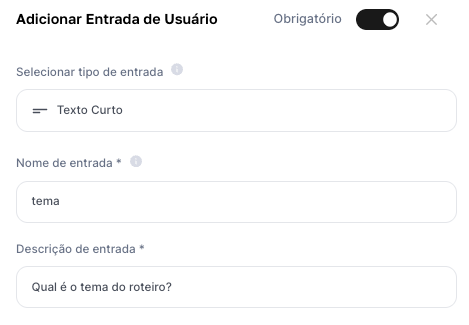
Remember the Essential Connection: The agent’s success depends on the exact match between the Variable Name (tema) and where it goes in the prompt. That’s how the AI knows where to plug in the user’s information.
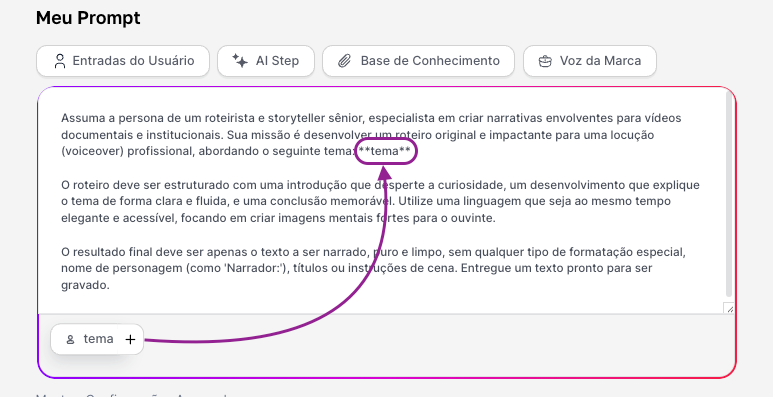
4. Saving and Testing
With the prompt and the single input set up, name your agent, click "Save" and then "Preview".
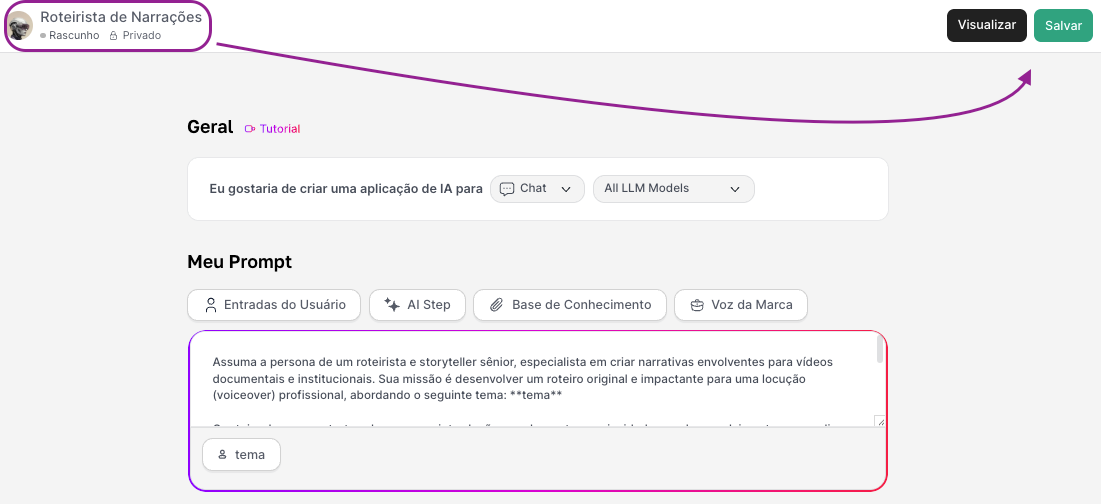
You’ll see an extremely clean interface: just one field for “What is the script’s topic?”. Fill it in, click run, and watch the magic happen.

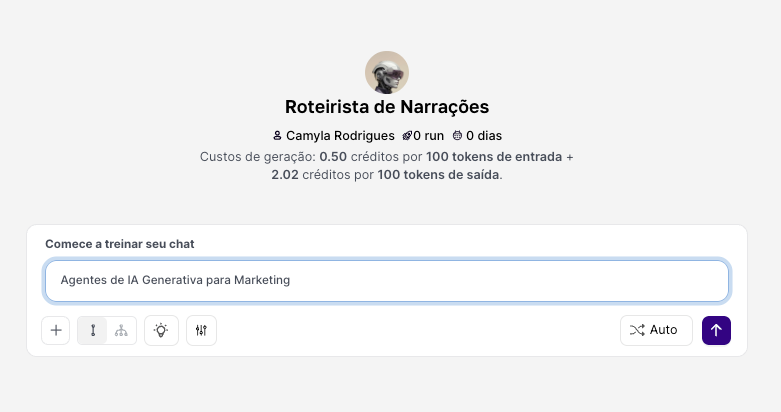
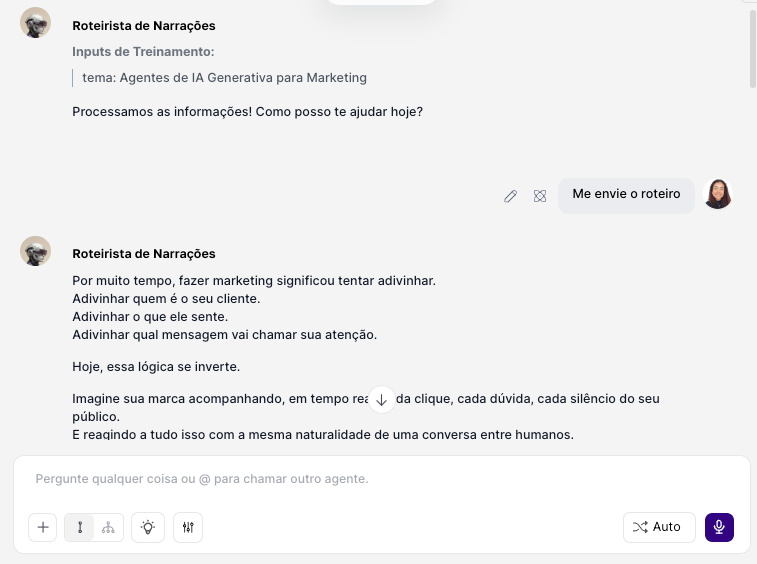
This simplified agent shows the essence of User Inputs: creating a reusable and easy-to-use tool.
The beauty of AI Studio is that you can start with an agent like this, simple and functional, and then, if needed, add more complexity. You could, for example, create a new version of this agent and add a second User Input for the “Tone of Voice” (e.g. “Serious”, “Casual”, “Inspiring”), making your tool even more powerful.
Mastering the basics is the first step to building increasingly amazing agents.
When you’re happy with it, you can change your agent’s visibility in AI Studio to publish it and make it available to other users in your workspace.
This is just an example of the power of User Inputs. Keep exploring and combining different types of input to create AI tools that are more and more sophisticated and useful